
Why Your Shadow Work Feels Shallow (and How to Do It Right)
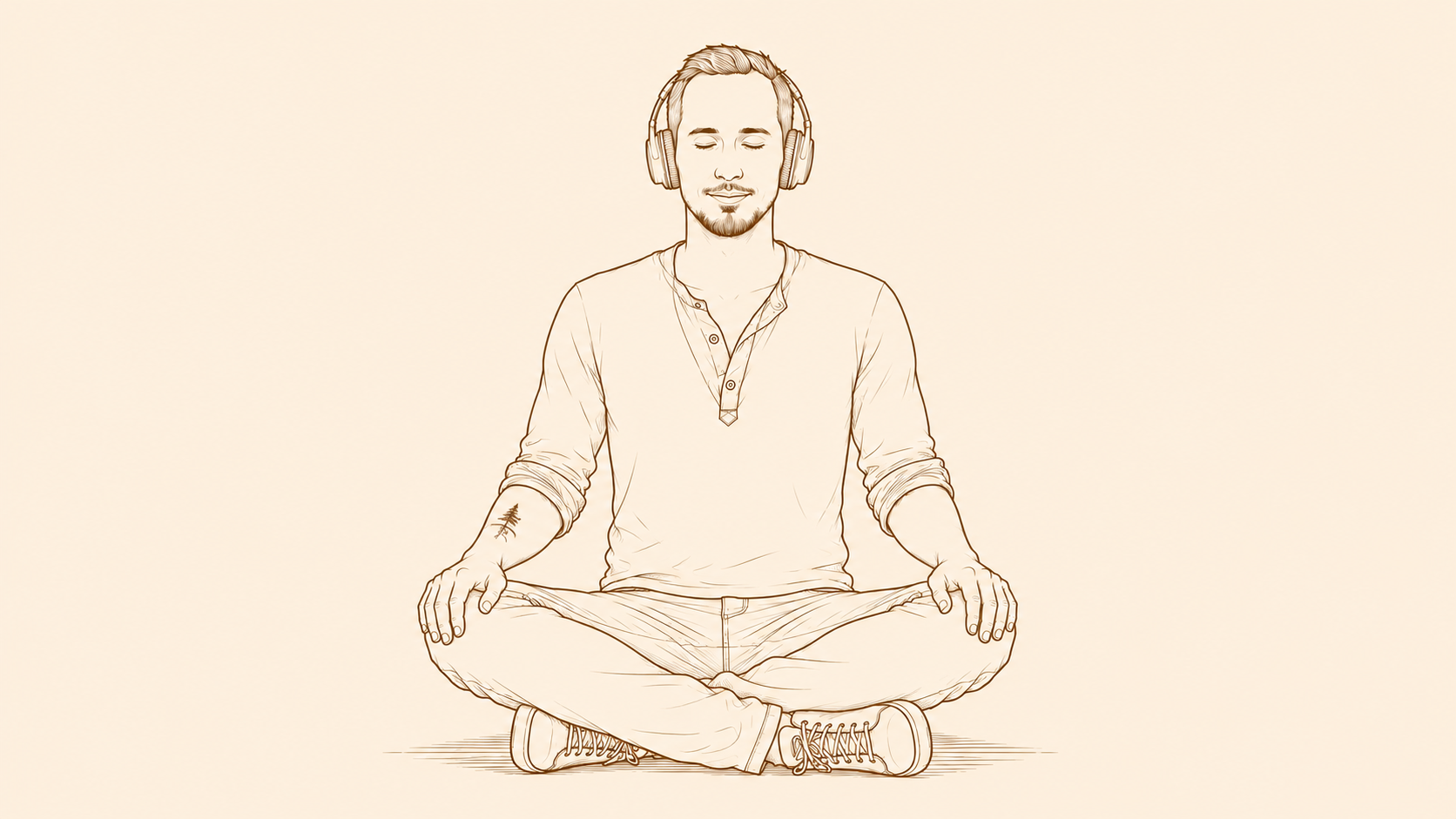
Have you ever sat down to do shadow work, spent an hour writing or meditating, and walked away thinking, "Is that it?"
Maybe you tried journaling prompts, followed a standard guided meditation, or listed out your bad memories and negative personality traits into neat, organized columns like you saw in a viral video. But when the session ended, you realized nothing had actually changed. There was no deep breakthrough, no sudden insight, and no real emotional release. You just scratched the surface.
If this sounds familiar, you are not alone. Most of the shadow work advice available online simply does not work.
People fail to reach the deeper layers of their psyche because they try to do shadow work using their everyday, normal waking awareness. This is the state of mind governed by logic, structure, and the ego—the exact mechanism designed to keep you feeling safe, comfortable, and in control.
When you try to bring that rigid, analytical thinking into the subconscious mind, you completely miss the mark. The subconscious does not think in spreadsheets or bulleted lists; it is symbolic, chaotic, fragmented, and intentionally buried.
Trying to analyze your deepest psychological shadows with your everyday, logical mind is like lighting a candle in broad daylight. What is the point? You only need a candle when you are willing to step out of the light and journey directly into the dark.
Moving Beyond the "Safe" Surface
It is completely understandable why we try to keep shadow work neat and tidy. Touching the subconscious mind can be genuinely terrifying. It is deeply uncomfortable to confront things you have spent years, or even decades, actively pushing down.
When you truly enter the subconscious, you may experience intense, uncomfortable physical sensations in your body. It is the same reason most people do not casually experiment with psychedelics—the experience strips away your illusion of control and forces you to confront realities you might not feel prepared to face.
However, this raw discomfort is precisely why authentic shadow work is so transformative. You cannot bring the subconscious up into the bright daylight of logic; you have to go down into the darkness and meet it on its own terms. True psychological transformation and personal power are hidden underneath the messy, gooey, and chaotic layers of your mind.
Why Do Shadow Work? The Gold Hidden in the Dark
If entering the subconscious is so uncomfortable and stirs up old, painful memories, why should anyone actually do it?
The answer lies in a fundamental psychological truth: When you bury your pain, you accidentally bury your power along with it.
Inside your most deeply repressed memories lie your hidden gifts, your unique talents, and your personal sovereignty. When we are forced to suppress our shadow traits, we inadvertently disable our greatest strengths.
Example 1: The Repressed Leader
Consider a young child who is naturally high-energy and perhaps a bit too rough or dominant with his siblings. To keep the peace, his parents punish him severely for his aggression, demanding that he sit still and stay quiet. Physically and psychologically, the child learns to completely repress his anger and violence.
The child grows into an adult who is entirely disconnected from his personal power. Because he was punished for asserting himself as a child, he is now terrified to use his strength—even for good things. He cannot stand up for himself at work, cannot set firm boundaries, and struggles to take decisive action in life because his vital drive was locked away in his shadow.
Example 2: The Silenced Innovator
Imagine a young girl who is naturally highly verbal, intensely curious, and asks constant questions. Occasionally, she speaks out of turn or says something blunt to an adult. Frustrated by the social friction, her parents and teachers squash her vocal nature, conditioning her to stay quiet, fit in, and speak only when spoken to.
As an adult, she find herself unable to express her true thoughts. She struggles to market her skills, sell her ideas, or push forward in her career. Furthermore, because her primary tool for boundary-setting—her voice—was taken away from her, she finds herself constantly taken advantage of by others.
Repressed Trait in ChildhoodThe Resulting Adult ShadowThe Hidden Gift to Reclaim
High energy / AggressionInability to assert power or take actionSovereignty, leadership, and driveHigh curiosity / VerbosityInability to speak up or set boundariesSelf-expression, marketing, and boundaries
These traits—power, assertiveness, intense self-expression—are not inherently good or bad. They are simply raw energies.
You can use self-expression to manipulate people, or you can use it to inspire and heal the world.
You can use power to oppress the weak, or you can use it to stand up against injustice.
The energy itself is neutral; the tragedy is losing access to it entirely.
The Social Tribe and the Survival Mechanism
No matter how well-intentioned or loving your parents were, they conditioned you. Every parent must condition their child to a certain degree so they can function safely within a family, a culture, and a broader society. Parents do not want to be publicly embarrassed by unusual behavior, and they naturally want their children to protect their social status and fit in with their peers.
Whenever a child exhibits an ability, trait, or behavior that falls outside the accepted norm of their family or culture, the environment immediately works to dampen, mold, and tune down that trait until it is socially acceptable.
Because a child relies entirely on adults for shelter, food, and protection, fitting in is a literal survival mechanism. The child thinks: I must be what they want me to be so that I am loved, accepted, and protected by the tribe. To maintain that safety, the child represses their anomalous traits into the subconscious mind, burying the positive potential of those gifts right along with them.
The Lion in the Cage vs. The Lion in the Savanna
To understand why conventional shadow work fails, imagine you want to truly study and understand a lion. Would you rather study a lion that has been locked inside a concrete zoo cage for its entire life, or would you travel to see the lion roaming freely in its natural habitat on the African savanna?
The savanna is undeniably more dangerous. It is hot, steamy, insects are everywhere, and the environment is unpredictable. But that is where the real lion lives.
Conventional shadow work tools—like casual journaling or analytical thinking—are the equivalent of looking at the lion through a zoo cage. You are trying to observe your subconscious from a safe, comfortable, and completely detached position. It is incredibly shallow. If you want to see your shadow for what it truly is, you must take your candle, step out of your comfort zone, and walk directly into the wild environment of your deeper mind.
Altering Your Brainwaves: The Key to Deep Inner Work
To successfully journey into your subconscious habitat, you have to fundamentally shift your brain chemistry. You must consciously guide your brain waves out of the active, logical Beta frequency and down into the deeply relaxed, receptive Alpha frequency.
For thousands of years, indigenous cultures around the globe have understood how to access these altered states of awareness without modern technology. When tribal communities need to enter a deep trance state to heal, find guidance, or face their shadows, they rely heavily on a steady, rhythmic, rapid drum beat.
Aside from sacred plant medicines, the repetitive vibration of a drum is one of humanity's oldest tools for shifting consciousness. When you immerse your senses in a steady rhythm:
Your everyday, logical mind begins to step back.
Your physical body naturally relaxes and settles.
Your breathing automatically slows down.
This process places you into a unique daydream-like state—halfway between waking and sleeping. Only when you occupy this specific twilight state of awareness can you bypass the defensive gatekeepers of your ego, dive deep into your psyche, and navigate the landscape effectively.
Embarking on the Subconscious Journey
This process is a subconscious journey because you are actively traveling downward into your inner world. You cannot simply command your shadow to come up to you; you must pack your bags, lower your awareness, and actively journey into the symbols, the uncomfortable body sensations, and the buried memories yourself.
Yes, looking for the root causes of your lifelong conditioning can be a deeply messy experience. You will likely encounter old feelings of abandonment, rejection, betrayal, and grief. But if you are willing to stay with the process and navigate through the emotional storm, you will invariably find the gold. You will retrieve the vital, hidden pieces of yourself that you abandoned long ago just to survive.
To support you in practicing this method safely and effectively at home, I have developed a comprehensive three-part beginner’s guide:
Part 1: The Core Foundation (10 Minutes): A detailed audio breakdown teaching you exactly how to prepare your mind, protect your energy, and understand the mechanics of the journey.
Part 2: The Guided Subconscious Journey: An immersive audio session where I personally guide you through the transition from waking awareness down into your subconscious database to help you experience your first breakthrough.
Part 3: The Pure Shamanic Drum Track: A standalone, high-quality rhythmic drum track that you can use independently once you feel comfortable navigating your inner world on your own.
Stop scratching the surface with superficial lists and intellectual exercises. Follow the link provided to access the full guide, download the drum tracks, and discover what is truly waiting for you within the shadows.