
How The Subconscious Mind Actually Work | Practical Guide
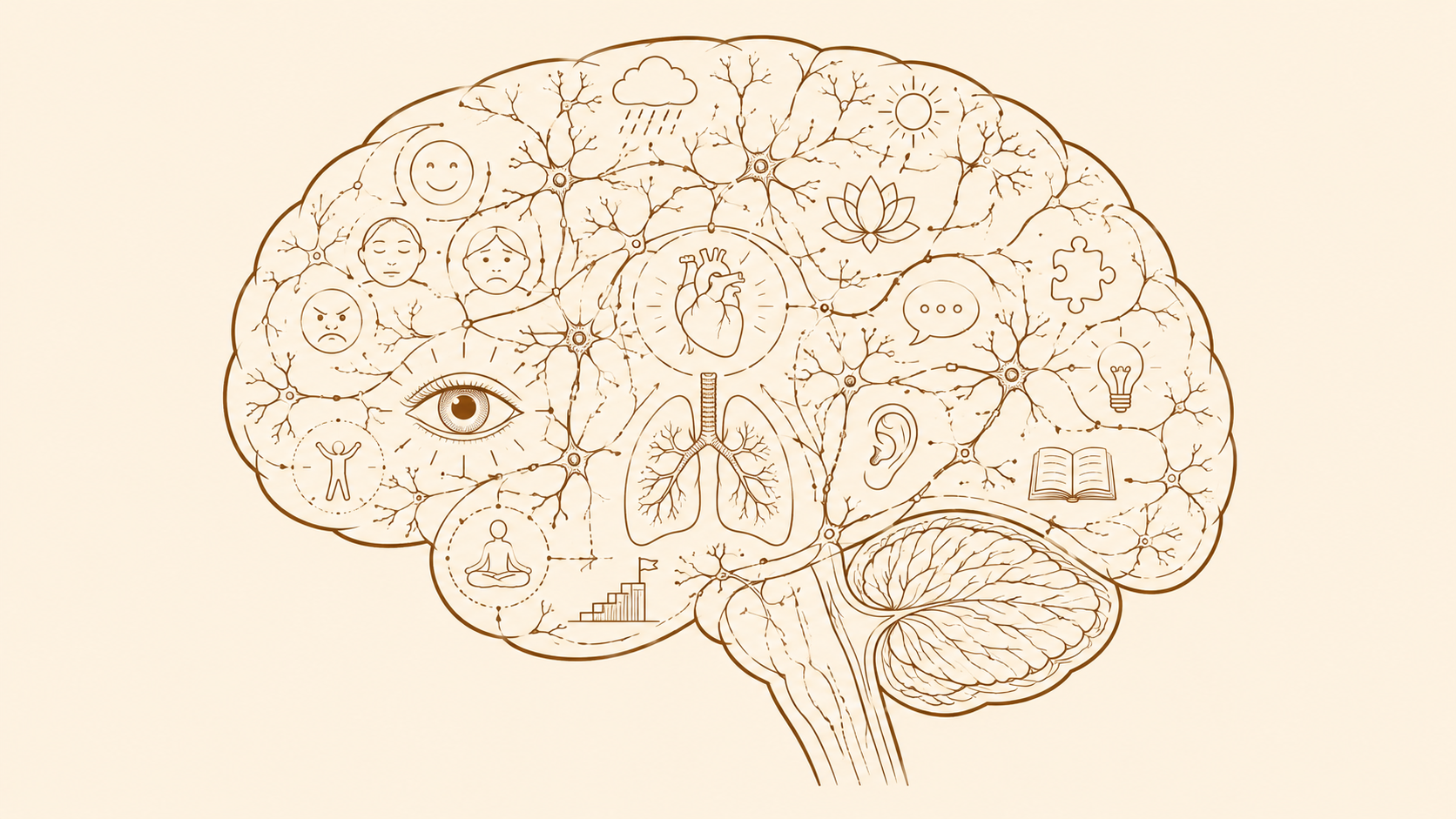
Have you ever wondered how the subconscious mind actually works?
We are not talking about the abstract, hyper-theoretical psychological models you find in textbooks. We are talking about the practical, real-world reality of what is happening inside your head—right now, inside that "box" we call the human brain.
As it turns out, the inner workings of your subconscious mind are much simpler than you have been led to believe. To understand it, you don't need a degree in neuroscience; you just need to look at the device you are likely using to read this article: your smartphone.
The Smartphone Metaphor: Understanding Your Brain’s Back End
Imagine yourself as a smartphone. When you look at a phone, you see a clean, user-friendly interface. You interact with the applications, scroll through feeds, tap buttons, and watch videos. This is your conscious awareness—the part of you that actively engages with the world.
But think about what is happening on the back end of that device:
Continuous Data Syncing: Information is constantly running around behind the scenes, syncing between your apps and the central database.
Active Connections: The phone is maintaining a background internet connection and managing power from the battery.
System Settings: Hardware drivers are regulating the brightness of the screen and the sensitivity of the microphone.
You do not see these background processes, nor are you actively aware of them. Frankly, under normal circumstances, you do not care about them. You only notice the battery when it runs critically low, and you only notice the internet connection when the signal icon starts blinking.
Until there is a problem, all of these signals run quietly in a maintenance mode behind the scenes so that the front-facing features can function seamlessly.
Why Your Mind Outsources Daily Maintenance
Your subconscious mind functions exactly like that smartphone's back end. When you interact with the world, your conscious energy is entirely consumed by your speech, your senses, and your immediate surroundings. The rest of the systemic data is intentionally hidden from your view.
Think about the sheer volume of tasks your body manages every single second. You do not want to consciously control your heart rate, calculate your digestion, regulate your blink rate, or manage saliva production every moment of the day.
If you had to direct your conscious attention to these autonomic processes, your brain would experience immediate cognitive overload. You keep these functions on the "bottom floor" of your mind because you need your primary awareness free to focus on what is happening directly in front of you.
The Evolutionary Root: Pure Survival
This division of labor between the conscious and subconscious mind is rooted in evolutionary biology and human survival.
To survive in a volatile physical world, our ancestors had to be hyper-aware of their immediate environment. Human awareness was designed by evolution to anticipate threats, communicate with the tribe, hunt for food, find shelter, run from predators, and organize communities.
Because our conscious attention is limited, we instinctively prioritize external factors that impact our immediate survival. We simply cannot afford to waste processing power on internal maintenance.
The subconscious floor only sends a signal up to our conscious awareness when an actual problem arises:
Your heart rate spikes dangerously high, forcing you to stop and rest.
Your nutrient levels drop, triggering intense hunger that drives you to find food.
Your system runs low on energy, inducing sleepiness to force you into recovery mode.
Until those alarms sound, the complex network of neurons firing to balance your nervous system, regulate oxygen levels, and manage carbon dioxide cycles runs entirely on autopilot.
Redefining the Subconscious Journey: Lowering Awareness
When people talk about doing "subconscious work" or embarking on an inner journey, they often mistake the direction of the process. They assume it is about pulling the subconscious up into waking awareness.
But by definition, the subconscious belongs downstairs; it is the collection of automatic patterns running behind the scenes.
True subconscious exploration is not about raising the subconscious upward. Instead, it is about lowering your level of conscious awareness down to the level of the subtle mind. It requires you to turn down the volume on external stimuli so you can become aware of your internal landscape.
The Shift in Brainwave Frequency
To achieve this state of deep internal focus, you must guide your brain waves down from their normal waking frequencies.
Brainwave StateFrequency RangeMental State
Beta Waves 12 Hz – 30 Hz. Normal waking consciousness, active thinking, high alert, stress
Alpha Waves 8 Hz – 12 Hz. Deep relaxation, light meditation, the gateway to the subconscious.
By reducing the frequency of your brain waves and transitioning from Beta to Alpha, your thoughts slow down. This slowing of the mind bridges the gap between your waking awareness and your internal database, allowing you to bring meaning to buried memories and deep-seated patterns.
Inside the Database: Emotions as Guardrails for Survival
The subconscious mind does more than just regulate your physical organs, it acts as the primary archive for your entire life experience. It holds your memories, your deepest emotions, your traumas, your greatest successes, and your heaviest failures.
The human brain is an efficient storage engine that preserves information by wrapping it in emotion. These stored emotions serve as the guardrails for your psychological survival:
The Emotional Reward System: When an action leads to success, happiness, or a connection, your brain releases neurochemicals like dopamine and oxytocin. Your subconscious registers this event as a "success shortcut" and labels it: This kept us safe and happy. Let's do it again.
Conversely, experiences that bring pain, anguish, guilt, shame, anxiety, or stress are flagged as dangerous threats. Your subconscious stores these negative emotional charges to create behavioral shortcuts that help you avoid similar situations in the future.
Because these automated shortcuts live in your internal database, they quietly dictate your day-to-day actions, habits, and choices without you ever realizing it.
How to Access Your Inner Archive
Naturally, we access this subconscious database every single night when we go to sleep. When your external senses shut down, your mind turns completely inward. This is why dreams feel incredibly vivid and deeply symbolic; you are experiencing your subconscious mind communicating in its native language while you are semi-aware.
However, relying solely on sleep means you cannot actively participate or ask questions of your subconscious. To explore this space while awake, you need a reliable method to lower your brain waves intentionally.
Why Typical Meditations Fail Modern Practitioners
Many modern mindfulness trends rely on nice binaural beats or gentle New Age guided imagery. While these tools can be relaxing, they rarely take the average person deep enough into the subconscious floor.
The reality of modern life presents significant obstacles to deep meditation:
Hectic Environments: The world is noisy and fast-paced.
Endless Responsibilities: Your mind is crowded with chores, jobs, groceries, exercise, and family care.
Shortened Attention Spans: Most people do not have the hours of uninterrupted silence required to cultivate deep meditative focus naturally.
Unless you are a monk or an expert meditator with years of training, trying to "fake" deep relaxation in a noisy world usually leaves you stuck in a restless, waking Beta state.
The Power of the Drum Track
To break out of day-to-day survival mode and step into the deep mind, you need an acoustic aid that actively assists your brain physics. This is why traditional journey practices utilize a steady, rhythmic drum track.
The repetitive acoustic frequency of a driving drum acts as a pacing mechanism for your neurology. It gives your hyper-active conscious mind a singular focal point, which accelerates the transition from high-frequency Beta waves down to relaxed Alpha and Theta frequencies. This structural support makes it possible to access deep states of inner awareness without needing a lifetime of monastic discipline.
Take Your First Subconscious Journey
Exploring your subconscious mind is a practical, repeatable skill rather than an elusive spiritual mystery. By deliberately lowering your awareness and slowing your brainwave states, you can open up your internal database, examine the automated patterns driving your life, and begin rewriting the programs that no longer serve you.
To help you experience this shift firsthand, I have put together a comprehensive collection of resources designed for beginners:
A Complete Beginner’s Guide: A step-by-step breakdown of how to prepare your space and mind for your first inner session.
A Dedicated Acoustic Drum Track: A calibrated rhythmic track engineered to help you naturally lower your brainwave frequency.
A Guided Subconscious Journey: An audio session designed to walk you through the process of safely navigating your internal landscape.